Top FinTech Events in the UK for Business Professionals
Not all FinTech events deliver the same returns. Pick events that match your role and goals, capture contacts with a single system, and follow up within 48 hours with one clear next step to turn conversations into opportunities.

You have limited time and a long list of FinTech events in the UK. Which ones will help you meet partners, find customers, hire talent, or spot investment opportunities? This article picks the most useful UK and UK-hosted FinTech gatherings for business professionals, explains who should go to each, and shows how to turn conversations into real results.
How to pick the right event for your goals
Start by being specific about what you want to accomplish. Instead of "networking," use measurable objectives such as:
- Find two potential enterprise customers for pilot projects
- Meet five senior product hires with payments experience
- Talk to three VCs or corporate partners about a Series A
Match a goal to the event type. For quick vetting, use three criteria: attendee profile, session format, and deal velocity. Attendee profile answers who will be there. Session format shows whether content is strategic, technical, or investor-focused. Deal velocity tells you how likely you are to close a partnership or hire after a short meeting.
Top FinTech events in the UK: what they are and who should attend
| Event | Primary focus | Who should attend |
|---|---|---|
| Money20/20 Europe | Broad payments, banking, card networks, and startups to enterprise connections | Payments teams, scaleups, enterprise partnerships, business development, investors |
| Innovate Finance Global Summit | Policy, scaleups, and the UK FinTech ecosystem | Founders, policy leads, corporate innovation teams, regulators, investors |
| FinTech Connect | Product showcases, vendor solutions, and technical tracks | Product managers, CTOs, vendors, solution architects |
| LendIt Fintech Europe | Digital banking, lending, and credit innovation | Lenders, credit risk leads, fintech founders, capital providers |
| FinovateEurope | Short demos, product launches, demo-driven discovery | Product teams, innovation scouts, early adopters, corporate partners |
| London FinTech Week | Series of events across the city, mixing panels, meetups, and workshops | Anyone who wants to sample a broad slice of the London FinTech scene |
| PayExpo | Payments and acquiring, merchant services, retail payments | Payment product leads, merchants, retail tech teams, acquiring banks |
Note: some events rotate locations or change formats. Use the event website to confirm the latest program before booking travel.
Which event suits your role: practical guidance
- Founder seeking customers: Money20/20 and London FinTech Week give visibility and many enterprise attendees. Prioritize booths or demo slots if you have a product to show.
- Head of partnerships at a bank: Innovate Finance and FinTech Connect host panels and curated meetings with startups and regulators.
- Product or engineering lead: FinTech Connect and FinovateEurope emphasize technical sessions and demos, making them useful for feature discovery and vendor evaluation.
- Investor or corporate VC: LendIt and Money20/20 are productive for deal flow in lending, payments, and embedded finance.
- Compliance and risk professionals: Innovate Finance and targeted track sessions at larger shows often include policy, regulation, and AML discussions.
How to prepare: practical checklist for the week before the event
- Set three clear outcomes and list the types of people who can help each outcome.
- Build a 20-second pitch and a one-page leave-behind or slide deck. Rehearse with a colleague and refine for clarity.
- Choose 10 priority contacts you want to meet. Use the event app, LinkedIn, or organizers to identify them and request meetings early.
- Prepare conversation starters tied to recent developments: a product launch, regulation update, or a relevant industry report. Avoid generic small talk.
- Decide how you will capture contact information: business cards, QR code, LinkedIn scan, or a contact app. Test your phone camera, card scanner, and transfer speed.
How to capture and manage contacts efficiently
Swapping contacts is easy. Turning them into business opportunities is the hard part. Use a single system at the event so nothing falls through the cracks. Practical steps:
- Immediately after each meeting, add a 1-line note about the context and a next step, while the conversation is fresh.
- If you collect paper business cards, digitize them before the end of the day. A business-card scanner app can speed up data entry and reduce transcription errors.
- Tag or label contacts by event and priority. That lets you batch follow-ups after the conference rather than composing individual notes from scratch.
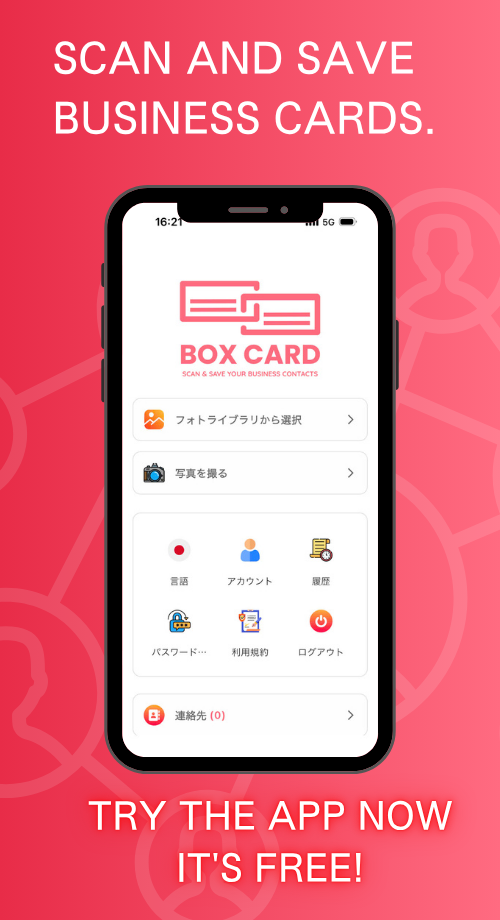
For people who still carry paper cards, Boxcard can be a practical tool: digitize business cards, organize contacts by tags or events, and keep contact information centrally managed. That saves time and stops cards from getting lost in a pocket.
Follow-up strategy that actually works
Timing and content matter. Use this three-step follow-up sequence as a template:
- Within 24 to 48 hours: send a short, personalized message that references the meeting, adds one useful resource or idea, and proposes a single clear next step.
- One week later: if no reply, send one reminder that adds value, for example a short note with a relevant case study or a suggested time for a call.
- Two to three weeks after that: if still no response, leave the door open with a final polite note and a permission-based opt-out, such as asking if you should follow up in a few months.
Personalization beats templates. Mention a specific problem they raised, a mutual connection, or a session you both attended. That signals you were listening and increases the chance of a reply.
Common mistakes to avoid
- Collecting cards without context. If you cannot note why the person matters, you are unlikely to act on the contact later.
- Failing to prioritize. Meeting everyone dilutes your follow-up energy. Focus on the top 10 contacts that map to your objectives.
- Leaving follow-up too vague. “Let us keep in touch” rarely leads to a meeting. Propose a clear next step with dates and a purpose.
- Relying solely on physical cards. Paper is fine, but losing a card means losing the relationship. Digitize and back up contacts daily.
Practical next steps
Decide what success looks like for the event you plan to attend. Pick one operational change to make this time: bring a concise leave-behind, reserve ten pre-scheduled meetings, or commit to digitizing cards daily with an app like Boxcard. That single change will raise the odds that conversations turn into measurable outcomes.
Keep goals specific, capture contact context immediately, and follow up with one clear next step.